Whisky Alcohol Percentage Explained: What Does ABV Mean?
Whisky is known to be consumed for its fragrance, taste, character, and unique heat. But the percentage of alcohol is one of the essential factors in terms of the analysis of the product. You can easily understand the product’s strength by checking its ABV (Alcohol by Volume). In detail, the alcohol percentage in a whisky determines the amount of alcohol in the beverage itself. Consequently, knowing about ABV can assist you in comparing different brands and reading the product label.
Additionally, the variety of whisky is rich in both styles and alcohol percentages. That is why we need to understand more about the term ABV and its significance.
1. What Is ABV in Whisky?
ABV is an acronym that stands for Alcohol by Volume. It refers to the quantity of alcohol in a beverage relative to its entire volume.
For instance, if you have whisky with an ABV of 40%, it means that out of 100 parts of liquid, 40 parts of it contain alcohol. Therefore, ABV is an easy way to determine the strength of an alcoholic beverage.
Also, producers generally display the ABV on the label. As a result, consumers can easily see how much alcohol whisky contains.
2. Alcohol Percentage in Whisky: What Does It Tell You?
Alcohol percentage in whisky refers to the concentration of alcohol in the finished product. Hence, it provides consumers with valuable information when comparing various brands of the drink.
Notably, ABV cannot account for the full flavor of the beverage. Other elements that affect the flavor of whisky include grains, distillation, aging, and blending, among others.
Moreover, whisky beverages with the same ABV can differ in taste. Therefore, alcohol percentage is just one component of the whisky.
3. What Is the Usual Alcohol Percentage in Whisky?
Many producers bottle standard whiskies at approximately 40% ABV, but the actual percentage depends on the product and the market. Some whiskies will have higher percentages of ABV especially cask-strength or high-strength whiskies.
As a consequence, you must consider checking each specific bottle to know the correct information. Besides, there are factors that could affect how manufacturers produce and present their whiskies.
Consequently, whisky producers around the world do not follow one universal ABV.
4. Is There Any Effect of Alcohol Percentage on Whisky Taste?
Alcohol can affect the way you taste whisky. For example, high alcohol content can create a warming sensation. In contrast, lower-alcohol whisky can be milder or softer.
However, alcohol is not the only element that affects the taste of the whisky. The malt character, wood effect, sweet, spicy, and fruit flavours and other elements can affect the taste.
In addition, adding just a bit of water will change the aroma and taste of some whiskies. So, you cannot evaluate the quality based on alcohol percentage.
5. Alcohol Content of Whisky and Different Types of Whisky
Whisky can have various strengths during bottling. This way, some blends, single malt whisky, and other types of whisky can have a specific percentage of alcohol that is different from usual bottles.
Moreover, whiskies of cask strength can be stronger than usual because the alcohol doesn’t need any extra dilution after bottling.
This way, checking the labels of different whiskeys is crucial to choose the right one. The style of a drink will help you decide about its type, while ABV will show you the percentage of alcohol.
6. How Is Whisky Alcohol Content Produced?
Whisky production includes many important stages. First of all, producers use grains and transform starches into sugars. Then yeasts ferment this liquid into alcohol.
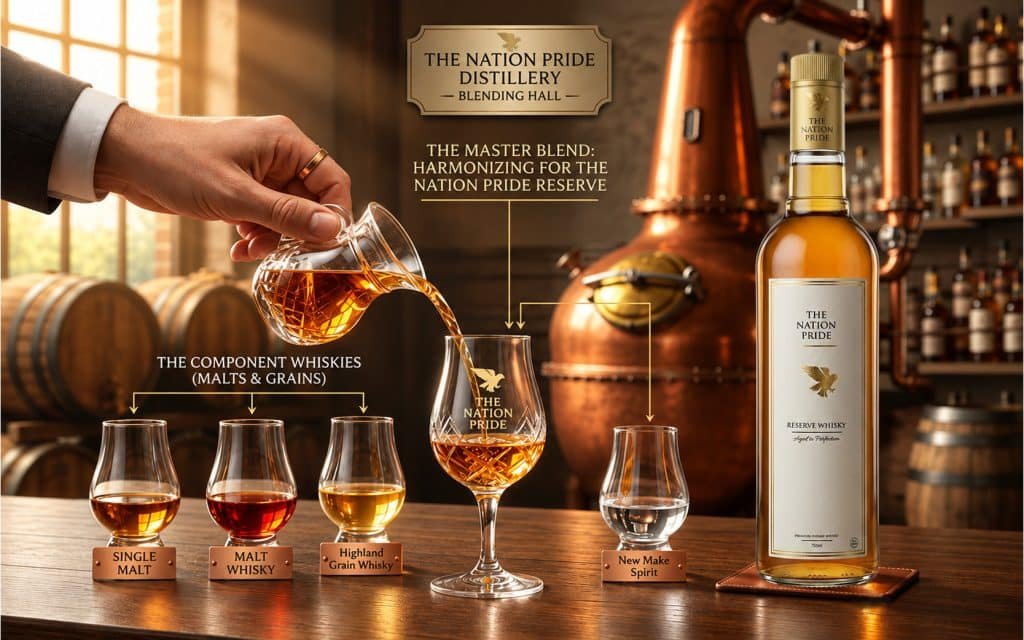
Whisky distillation increases alcohol content and gives it its unique taste. Producers also age whisky in suitable casks.
7. Does the Strength of Whisky Increase With Maturation?
The process of maturation may influence whisky significantly, but it does not necessarily mean that The maturation process does not necessarily increase the drink’s alcohol content. Over many years in the barrel, whisky is exposed to wood, and some liquid and alcohol may evaporate.
Thus, the alcohol content may change with maturation, depending on various conditions like the place of maturation, climate, type of barrel, and others.
However, the producer determines the strength at which the whisky reaches the bottle.
8. What Is Behind Higher ABV Whiskies?
Higher ABV may be characteristic for some types of whisky, as it allows producers to keep certain characteristics of the product or simply offer undiluted whisky. Cask-strength whisky is a good example.
Additionally, higher-strength products may offer drinkers a more intense taste and aroma of whisky. However, higher alcohol content is not always better.
The ideal ABV of whisky is determined by the personal preferences of each person.
9. How Does Dilution Affect the Strength of Whisky?
Water may be added prior to bottling to attain the necessary alcohol content. This practice dilutes the alcohol but keeps its core intact.
In a similar way, it is possible for people to dilute whisky when tasting it. Consequently, the beverage becomes less concentrated and the smell easier to discover.
Nonetheless, it depends on the individual how much water he or she uses because there is no set quantity of it to add.
10. How Can One Identify the ABV of a Whisky Bottling?
The identification of ABV on a whisky bottle is not difficult. It is necessary to look for percent ABV or alcohol by volume.
In case the label states 42.8% ABV, it means that alcohol constitutes 42.8% of the liquid volume.
Moreover, there may be data about the type of the whisky, volume, place of production, and company on the label. Thus, the full analysis of it will give you more knowledge about the product.
11. Whisky Alcohol Percentage: What Must Beginners Learn?
Learning about the alcohol percentage in whiskies is one of the most crucial elements that beginners must learn. Nevertheless, it is recommended that beginners do not assess a whisky solely based on its ABV.
Consider other factors such as its aroma, taste, texture, type of whisky, and way it is served. Also, opt for responsible serving portions and be patient.
Whiskies made by Grihy Beverages differ from one another in terms of their unique characteristics. Therefore, consumers need to look through the labels and information on a particular whisky to learn more about its ABV.
12. Alcohol Percentage in Whisky: How to Make Your Choice
At first, consider the ABV of different whiskies before making your choice. After that, consider the amount you want to drink and the occasion.
A greater ABV shows that there is more alcohol in whisky per volume. In order to avoid risks, it is recommended that you drink responsibly and carefully.
Finally, drink your whisky, considering the drinking age limits in your area.
Frequently Asked Questions About Whisky ABV
Q1. What is the alcohol percentage of whisky?
The alcohol percentage of whisky is the ratio of alcohol in the drink. Regular whiskies are bottled in 40% alcohol percentage, but there are whiskies with different alcohol percentages.
Q2. Is there a connection between alcohol percentage and the quality of whisky?
No, there is no connection between alcohol percentage and the quality of a particular whisky because whisky quality is related to how the drink was produced and other things.
Q3. What is meant by 40% ABV written on the bottle?
ABV is the ratio of alcohol by volume of the drink. Thus, 40% ABV is equal to 40% of alcohol in the drink.
Q4. Is there any possibility that the addition of water can help in reducing the ABV of whisky?
Yes. The addition of water helps in increasing the total volume of liquid without changing the quantity of alcohol present in it, which results in a decrease in alcohol concentration.
Q5. Why is the ABV of some whiskies above 40%?
The reason behind having an ABV above 40% in some whiskies is that sometimes, the distillers produce them in high ABV.