Premium Whisky vs Regular Whisky: Understanding the Difference
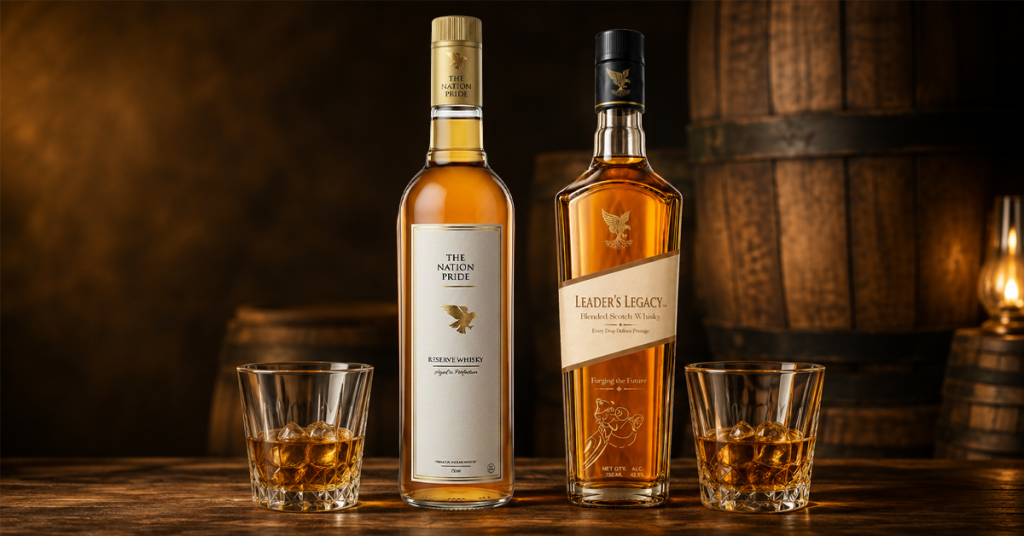
While considering premium whisky vs regular whisky, some people think solely about their price tags. Yet, the actual differences can relate to production techniques, ingredients, blending, and aging. They can also involve flavor, packaging, and brand positioning. It is necessary to note that the higher price tag does not always guarantee a preference for one whisky category over another by any consumer.
Premium whisky and regular whiskies could both provide a pleasant experience to drinkers. Yet, they aim at different customer expectations. For instance, premium whisky could include special blending, unique character, sophisticated packaging, and aging processes.
So, knowing the difference between premium whisky and regular whisky could help adults to choose the appropriate type based on their personal preferences and needs. This guide is going to cover the aspects that affect whisky’s final result.Yet, the actual differences can relate to production techniques, ingredients, blending, and aging. They can also involve flavor, packaging, and brand positioning
1. Premium Whisky vs Regular Whisky: What Does This All Mean?
The term “premium whisky” typically refers to a product positioned around quality and craftsmanship. It may also highlight unique ingredients, production methods, and presentation. The use of the word “premium,” however, does not mean that there is a universal measure of quality applicable to all markets.
A regular whisky is normally a product of good craftsmanship whose quality is not exceptional and is available everywhere.
This is because there is no clear distinction between premium whisky vs regular whisky as either one of them can be good or bad based on the consumer’s personal preference and needs.
2. Ingredient and Production Process
The ingredient selection in the production process helps the manufacturer develop a certain type of product that will suit the needs of their customers.
It will be interesting to note that the production of a premium whisky will involve a higher level of attention in the selection of the ingredients and in the whole process itself. This does not mean that regular whisky is produced with lower quality in terms of production process and ingredient selection.
In fact, grain selection, the distillation process, and aging conditions may play a vital role in the aromatics, body, sweetness, spice, and finish of the product.
3. Maturation and Impact of the Cask on Whisky
Maturation and complexity of the whisky come as a result of the maturation process. In the course of maturation, the spirit undergoes the effect of the wooden cask, resulting in various flavors of vanilla, caramel, spices, fruits, toasting, or oak.
The quality whisky would use the right casks and maturation methods to ensure the distinctive taste of the whisky. Nevertheless, maturation process is not the only factor that can influence the quality of the whisky, as the cask itself, weather, character of the spirit, and even blending have their impact on the process.
That is why the age statement is helpful information while choosing whisky, but it is not the only criterion for selection. Indeed, the maturation process has its own importance when distinguishing the premium whisky from the ordinary one.
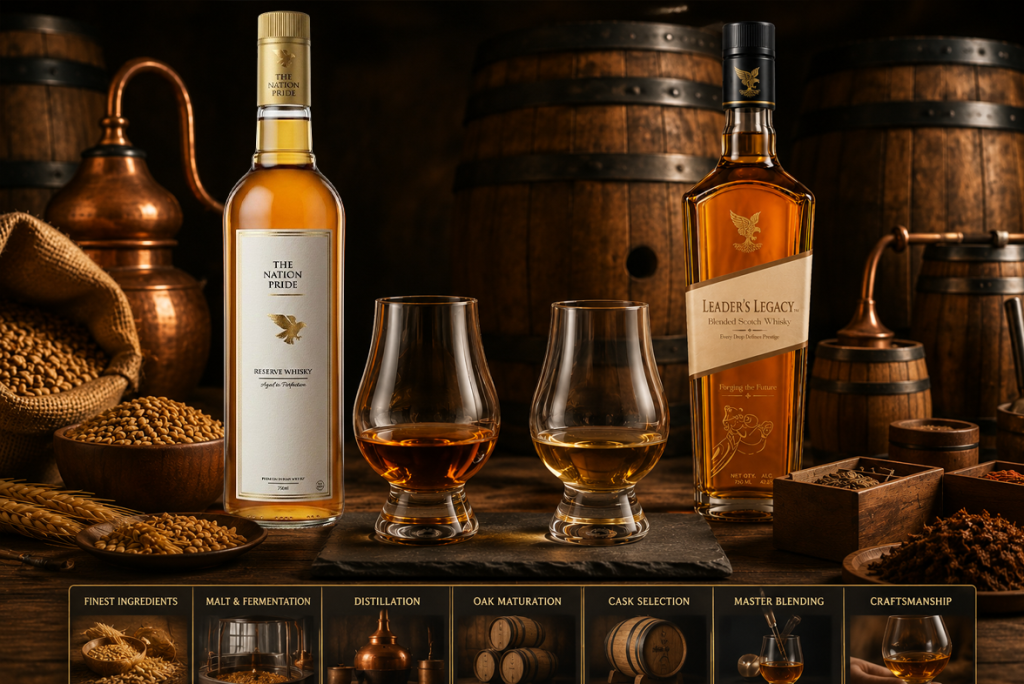
4. Premium Whisky vs Regular Whisky: Taste and Flavor
The taste tends to be the primary source of difference between premium and regular items. The former might contain more complex aroma, body, or finish.
At the same time, regular whiskies may have more distinct and straightforward flavors, which are preferred by consumers who like things simple. Premium items, on the other hand, might contain more pronounced flavors of fruit, spices, wood, vanilla, malt, or even smoke.
Nonetheless, taste preferences differ greatly and can be considered a purely subjective thing. As a result, the flavor that some people consider to be too complicated might become appealing to other people.
Ultimately, whether an item is premium or not depends mostly on personal preference.
5. Artisanry and Consistency
Artisanry has much more meaning than distillation alone. It can include the process starting from choosing ingredients, distillation, bottling, blending, filtration choices, and many other things.
Consistency is crucial for both high-end and average brands to make sure that their product will be consistent in each bottle. Also, consistency is necessary because people need to receive the same experience by consuming the same type of whisky.
Therefore, artisanry and consistency can be interdependent and not conflict with each other.
6. Packaging and Brand Appearance
The packaging of the whisky might have a huge impact on how consumers perceive it. For example, high-end whisky is known to have special packaging that highlights its sophistication.
Ordinary whisky will focus more on practical packaging and proper branding. This might be helpful since it makes the beverage more recognizable and available to a bigger number of people.
Nevertheless, nice packaging does not always mean that the whisky inside is better than other beverages. Consumers have to think about packaging as a component of the brand experience.
Hence, packaging is one aspect that is different between premium and ordinary whisky, but consumers should pay attention to others as well.
7. Price and Value
The price is usually the first thing that creates a major difference between premium and standard whiskies. The reason why premium whiskies cost more than ordinary ones varies and might include production process, aging, cask selection, packaging, distribution, and even marketing strategies.
However, in some cases, price and quality have nothing to do with each other. The high price can be explained by rarity, packaging, production process, or prestige, but not by the flavor which everyone will enjoy.
That is why, when comparing premium vs regular whisky, it is crucial to assess the value rather than just the price.
8. Selecting the Correct Whisky Based on Personal Tastes
The correct selection will be based on the expectations. Those who are keen on having multiple aroma levels and finishes might prefer the premium varieties of the whisky.
For those who love easy and straightforward tastes in whisky for familiar events, the regular whisky will meet their taste requirements.
It is also important to note the type of flavors preferred, budget, occasion, method of serving, and personal taste requirements. Information and tasting notes will also assist in making better decisions.
For adults that are trying out the premium and regular whiskies, it will be wise to choose according to taste first before considering cost.
9. A Simple Comparison of Both Types of Whisky
There is nothing better than the comparison of both types of whisky from the factors influencing the development of their own categories.
In the case of premium whisky, there is an emphasis on unique qualities, craftsmanship, carefully chosen production components, presentation, and brand experience. For regular whisky, there is an emphasis on availability, consistency, identifiable flavor, and affordable cost.
No category is suitable for all consumers. It is determined by personal preferences, expectations and budget.
Finally, the comparison of premium whisky vs regular whisky is a matter of positioning, but not quality.
FAQs
Q1. What Is the Main Difference between Premium Whisky vs Regular Whisky?
It could be related to positioning, production, taste variety, aging process, packaging, or price. Premium brands will emphasize their unique characteristics and its premium quality, but regular whisky brands will concentrate on consistency and availability of products.
Q2. Does Premium Whisky Always Yield Better Results than Regular Whisky?
No, premium and regular whisky brands do not always result in better products. It depends on personal tastes. For some people more complicated and sophisticated flavors are better; for other people more simple flavors of regular whisky are preferable.
Q3. Is Higher Price Equal to Quality Whisky?
Not always since a higher price is an indicator of production cost, aging process, packaging, distribution, rarity, and brand marketing. Hence, consumers need to assess the flavor and quality, craftsmanship, and preference along with the price.
Q4. Does Age Impact the Quality of Whisky?
While age might impact the taste and style of a whisky, this does not automatically indicate that the quality of the whisky is high. There are several other factors that are involved in this process.
Q5. How Would a Novice Decide to Choose between Premium Whisky vs Regular Whisky?
The novice could look at his/her preferences as far as taste, budget, and purpose for consumption is concerned.