How Is Whisky Made? Complete Whisky Manufacturing Process
Have you ever thought about how whisky makers transform ordinary grains, water, and yeast into whisky? Whisky manufacturers follow a well-planned process that combines traditional methods with modern technologies.
By learning how to produce this beverage, one will be able not only to understand the effort, components, and time required for its manufacture but also the importance of every step in the process.
In addition, there exist various ways of manufacturing whiskies used by different countries or distilleries. So, Scotch whisky, American bourbon, Irish whiskey, and Indian whisky may use different grains, devices, and methods of aging. However, all these types of alcohol possess some common principles of production.
In this article, we will investigate the entire process of manufacturing this drink, find out the significance of every ingredient, and discover the transformation of grains into the final product.
How is whisky produced? Knowing the Basics of Whisky Production
Whisky production begins with grain-based raw materials, water, and yeast. During the initial stages, producers process the grains and extract fermentable sugars. Next, yeast converts these sugars into alcohol through fermentation. Finally, distillers concentrate the resulting liquid through the distillation process.
It does not end here though, as most producers age the spirit in wooden barrels and give it additional flavours, aromas, and color. At the end of the day, they process the whisky for blending, filtration, and bottling.
The major stages include:
- Grain selection
- Malting where required
- Milling and mashing
- Fermentation
- Distillation
- Spirit selection and cask filling
- Maturation
- Blending, filtration, and bottling
These stages constitute the major overview of the whisky production process. However, particular distilleries can employ different production processes depending on their whisky type.
Which Ingredients Are Used by Producers in Producing Whisky?
Before exploring the different production stages, it is useful to understand the main materials required by manufacturers. Although the process involves several technical steps and specialised equipment, the essential components are quite simple.
Each ingredient plays a specific role in the overall process. Grains provide the starch needed for sugar production, while water supports grain preparation and mashing. Yeast then converts fermentable sugars into alcohol during fermentation. The quality and selection of these materials can also influence the aroma, flavour, and character of the final spirit.
1. Grains
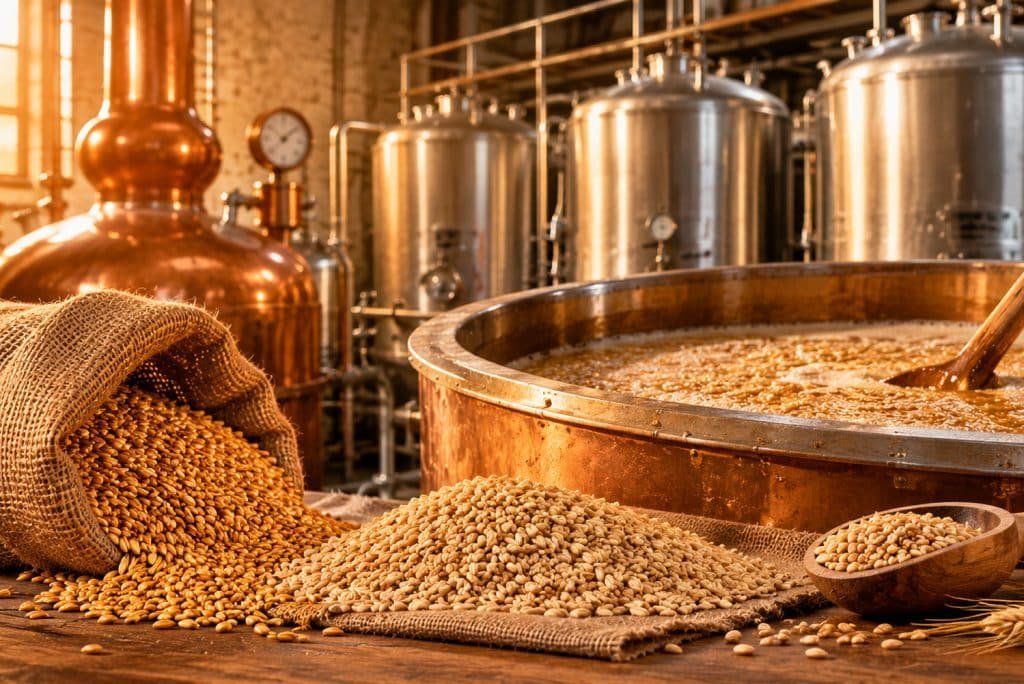
Grains contain starches, which producers ferment to produce fermentable sugar for whisky production.
The types of grains used vary from one category of whisky to another and include
- Barley: Malted barley is used in producing single malt whisky. The grain is also known to contain enzymes that aid in fermentation to form fermentable sugars.
- Corn: Corn is widely used in making bourbon whiskies in America. It adds a natural sweetness of grain to whisky.
- Rye: This type of grain can add a peppery or herbaceous taste to the whisky.
- Wheat: Wheat can give the whisky a soft grain character.
2. Water
Water serves various functions in whisky manufacturing. Producers use it to prepare grains, carry out mashing, and sometimes support fermentation.
Moreover, distilleries also use water in reducing the spirits to the desired level of bottling strength. Also, water is used by distilleries in cooling apparatus during distillation.
As such, having a steady supply of suitable water is important in ensuring consistency in production.
3. Yeast
During this stage, yeast converts fermentable sugars into alcohol and carbon dioxide. Along with alcohol, it produces flavour compounds that contribute fruity, floral, and other aromas to the developing liquid. The type of yeast, temperature, and duration all influence the chemical reactions taking place.
Different yeast strains can create different flavour profiles. Moreover, maintaining a suitable temperature helps yeast remain active throughout the process. The length of this stage also affects the development of aroma and flavour compounds. Therefore, careful control of these conditions helps producers maintain consistency and achieve the desired characteristics in the final spirit.
What is grain preparation?
The initial stage establishes a strong foundation for the later manufacturing steps. During this phase, workers prepare the selected raw materials for further treatment. Proper preparation helps ensure that the materials are suitable for the next stages. It also supports the efficient conversion of starch into fermentable sugars. Moreover, careful handling at this point can help maintain consistency throughout the production process.
1. Selecting the Grain
First, distilleries choose grains according to the type of whisky they plan to make. For example, single malt whisky uses only malted barley under the relevant production regulations, while other whisky types may use corn, rye, wheat, and other grains. After selection, producers analyze grain quality to maintain consistency throughout production.
2. Malting
Malting is particularly significant for making malt whisky.
Here, manufacturers immerse barley in water to stimulate germination. In the course of germination, the growing grain produces enzymes that facilitate the conversion of starch into simpler molecules.
Then, manufacturers dry germinated barley in a kiln to halt the germination while preserving enzymes needed for mashing.
In addition, some manufacturers dry barley in the presence of peat smoke. Therefore, the malt acquires smoky flavors that characterize the final whisky.
It should be noted that not all whiskies undergo malting. For example, in the case of grain whisky, manufacturers use un-malted cereals and other sources of enzymes allowed.
3. Milling
Finally, producers mill the grains into a coarse substance called grist.
Milling opens the grain and allows hot water and enzymes to convert its starch into fermentable sugars.
The key point of milling is to obtain a proper grain structure, but not a powder-like substance.
How Does Mashing and Fermentation Occur?
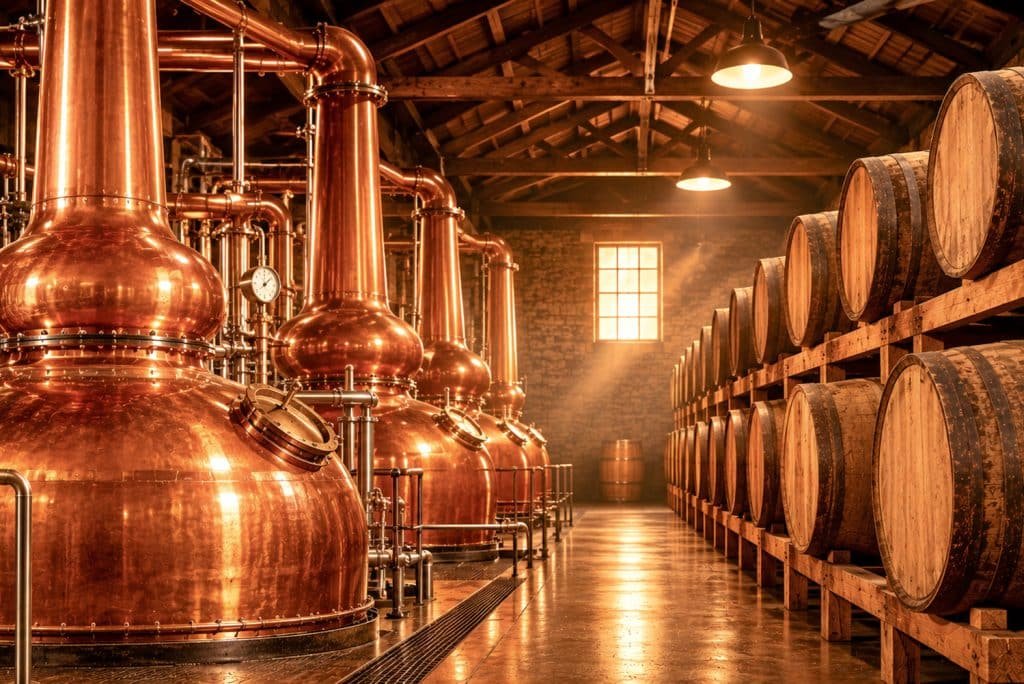
After preparing the grains, the next stage combines two important operations: mashing and fermentation. During these stages, enzymes break down the starch present in the grains and convert it into fermentable sugars. These sugars then provide the essential material for alcohol production.
Warm water helps extract the available sugars during mashing. Afterward, producers transfer the resulting liquid to fermentation vessels and add yeast. The yeast consumes the sugars and produces alcohol along with carbon dioxide. Both stages play an important role in developing the liquid’s initial characteristics.
1. Mashing
Mashing involves the mixing of the prepared grains with warm water in a container called the mash tun. The warmth and enzymes lead to the conversion of starch to fermentable sugars, resulting in a sweet liquid referred to as wort. The wort is separated from the left-over grain before being transferred to the fermentation tanks. Producers call the leftover grain draff in malt whisky production and can use it for other purposes, such as animal feed.
2. Fermentation
Fermentation refers to the stage at which alcohol production commences. Distillery workers add yeast to the cooled wort in fermentation tanks known as washbacks or fermenters. Yeast feeds on fermentable sugars to form alcohol and carbon dioxide. Moreover, the yeast forms various flavoring agents while performing the above functions. They are responsible for imparting fruity, floral, and other aroma flavors that might be present in the final product. Producers call the final liquid formed during this process wash.. Wash is similar to beer but has relatively lower alcohol content and usually ranges from 6 to 10%. Moreover, fermentation time, temperatures, yeast used, and vessel conditions affect flavor.
Whisky Distillation Process
This stage separates alcohol and selected flavour compounds from the fermented liquid. To carry out this operation, producers use specialized equipment designed to heat the mixture and collect the desired vapors. Two main types of equipment are commonly used in distilleries.
Each type operates differently and can influence the character of the resulting liquid. The choice depends on the producer’s requirements and the style they want to achieve. Temperature control and equipment design also play important roles in this stage. Careful operation helps distillers obtain the desired strength and flavour characteristics.
Understanding Different Types of Whisky Stills
Producers generally rely on three main types of specialised equipment for this stage. Each type has a different design and operating method. One works in separate batches, while the other allows continuous processing. The selection depends on the desired production style, flavour profile, and manufacturing requirements.
1. Pot Stills Distillation
This equipment is commonly used to produce single malt Scotch and several other varieties. It operates in batches. During the process, distillers heat the fermented wash in copper containers, causing alcohol and certain volatile compounds to evaporate. Next, the vapours rise through the neck of the equipment and enter a condenser. The condenser cools these vapors and converts them back into liquid. Many Scotch malt producers carry out two rounds of this process. However, some distilleries perform three rounds or follow other production methods.
2. Column Still Distillation
In column stills, the producer has the ability to perform continuous distillation. Whereas pot stills use the batch distillation method, column stills operate on a continuous distillation basis. In other words, there is a continuous flow of the fluid. Distilleries frequently use column stills to produce grain whisky and some American whiskeys.
3. Spirit Selection
The spirit acquires varying properties during the course of distillation.
The distillation process is generally divided into three broad stages:
Heads: The initial part of the distillation liquid containing some volatile constituents.
Heart: The chosen middle part giving the required spirit character.
Tails: The last part of distillation containing the heavier constituents.
Distillers select the heart cut according to their production requirements.
Moreover, distillers may send parts of the heads and tails back for further distillation. Therefore, the distillation method and spirit selection influence the final flavour and taste.
Why Does Distillation Matter in Whisky Production?
The method used and the portions selected during this stage influence the flavour, aroma, and overall character of the resulting liquid. Careful separation allows producers to retain the desired components while removing unwanted substances. Each selection contributes to the quality and consistency of the final product. Moreover, factors such as temperature control and production techniques can create noticeable differences in its sensory profile.
Cask Maturation – How It Affects Whisky?
After the process of distillation, the spirit goes through the maturation process using wooden casks.
It is essential that maturation affects the taste, smell, color, and profile of whisky.
The distilled spirit is generally clear, while the aged spirit acquires new attributes due to the interaction between the spirit and the cask.
1. Oak Casks
Oak wood plays an important role in the aging of whisky.
Manufacturers choose different types of oak casks according to the whisky category and its intended flavour.
For example:
Bourbon casks: Producers previously used these casks to mature bourbon, and they can contribute vanilla, caramel, and sweet oak flavours to whisky.
Sherry casks: This cask gives dried fruit, nutty, and spicy flavor.
New oak casks: American bourbon producers use these casks during maturation.
2. Effects of Ageing on Whisky
During ageing, the spirit interacts with the wooden cask. Several natural factors contribute to this process. First, the spirit extracts different compounds from the oak wood. Meanwhile, chemical reactions gradually change its aroma and flavour. Environmental conditions also influence how the spirit interacts with the cask.
Such elements as temperature, humidity, size of the cask, what was stored in it before, etc., may influence the process of maturation.
For instance, higher temperatures may facilitate some interactions between the spirit and wood. But faster maturation does not necessarily mean good whisky.
3. What Is the Angel's Share?
During the maturation process, part of whisky evaporates from the wooden cask. Whisky manufacturers refer to the process of evaporation as Angel’s Share.
It may depend on climatic conditions, humidity, storage conditions, etc.
Therefore, distillers keep track of their barrels during the maturation process.
4. Does Whisky Continue to Mature after Being Put into the Bottle?
No. Whisky usually stops maturing when producers transfer it into bottles.
Unlike the wooden barrels, where there is some kind of interaction between the liquid and oak wood, bottles made of glass prevent such interaction.
That means that a bottle of whisky does not mature anymore during several years of its storage.
How is Whisky Production Different Around the World?
Even though there are some general production principles of whisky, different countries have their own standards of production.
Knowing these differences makes one understand why Scotch, bourbon, Irish whiskey, and Indian whisky are different from each other.
1. Scotch Whisky
Scotland produces Scotch whisky under legally defined production standards.
For instance, Scotch whisky manufacturers should age the whisky in Scotland for at least three years in oak barrels with maximum capacity of 700 liters.
Single malt Scotch whisky uses only water and malted barley without any other cereals.
Producers also use traditional batch distillation in copper pot stills.
However, grain Scotch whisky has other standards of grain and production.
2. American Bourbon
Bourbon is one of the most important types of American whiskey.
For it to be classified as a bourbon whiskey, the whiskey should consist of at least 51% corn.
Distillation and maturation guidelines are also required.
Moreover, the process of maturation in the case of bourbon involves the use of new charred oak vessels.
These guidelines make it possible to differentiate bourbon from other American whiskeys.
3. Irish Whiskey
Irish whiskey producers follow specific production and geographical guidelines.
Different grains and distillation methods can be used depending on the type of whiskey.
This is because producers make Irish whiskey in three major styles: malt whiskey, grain whiskey, and pot still whiskey.
4. Indian Whisky
The Indian whisky industry has a range of production methods and categories.
Indians employ different types of grains as well as different methods of production according to the type of category they are producing.
Moreover, there are some manufacturers who produce Indian single malt whisky using malted barley.
In addition, the Food Safety and Standards Authority of India (FSSAI) has specific definitions for each whisky category.
For example, The 2023 amendment defines single malt whisky as a spirit that producers make from fermented malted barley without adding other grains. They must distil it only in pot stills at a single distillery.
Thus, Indian whisky production cannot be described by one universal production process.
What Takes Place During Blending and Bottling?
1. Blending
Following the aging process, manufacturers will be ready to give the whisky its finishing touches.
Producers will blend different whisky components or cask selections according to the product line.
The blending process entails mixing of different elements of whisky depending on the type of the product line.
For instance, producers mix malt whisky and grain whisky to create blended Scotch whisky.
For single malts, producers blend whisky from different casks within the same distillery.
It is important to note that single malt does not necessarily refer to the whisky from a single cask.
2. Altering the Alcohol Content
Following the mixing of the final product, producers can decide to use water to reach the desired alcohol content in bottling.
This ensures that producers get a standard alcohol percentage in all batches.
In most cases, cask-strength products will contain alcohol close to their natural level.
3. Filtration
In the production of whisky, filtration might be necessary to get rid of some unwanted matter.
Chill filtration ensures that there will not be any cloudiness upon cooling by consumers.
Non-chill filtration is practiced to retain many natural components of the whisky.
4. Bottling and Packaging
In the final stage, bottling machines fill clean glass bottles with the finished whisky.
These bottles carry labels which have the following information regarding the product:
- Brand name
- Whisky type
- Alcohol content (ABV)
- Volume of the bottle
- Age, if any
- Country of origin
- Producer name
What Factors Influence the Final Taste of Whisky?
The manufacturing process involves several decisions that influence the final flavour and aroma.
However, no single production stage determines the entire character of whisky.
Consider these important factors:
| Production factor | Possible influence |
|---|---|
| Grain selection | Sweet, spicy, cereal, or grain characteristics |
| Malting and kilning | Enzyme development and possible smoky notes |
| Yeast selection | Fruity, floral, and other flavour compounds |
| Fermentation time | Development of different flavour compounds |
| Still design | Spirit character and distillation characteristics |
| Spirit selection | Balance of lighter and heavier flavour compounds |
| Oak casks | Vanilla, spice, wood, and dried fruit characteristics |
| Maturation conditions | Changes in aroma, colour, and flavour |
| Blending | Consistency and overall flavour balance |
Consequently, two distilleries using similar ingredients may produce noticeably different whiskies because their production choices and maturation conditions differ.
Frequently Asked Questions About How Whisky Is Made
Q1. How Is Whisky Produced from Grains?
Whisky is produced from grains like barley, corn, rye, or wheat. During the first stage of whisky production, producers process the grains and extract fermentable sugars through mashing. The second stage is the fermentation, where yeast converts sugars into alcohol. Distillation is the third stage.
Q2. How Is Whisky Produced in a Distillery?
Production of whisky in a distillery includes several major stages. These are selection of grains, malting if needed, milling, mashing, fermentation, distillation, and maturation. Afterwards, blending, filtration, and bottling of the final whisky take place as per requirements.
Q3. What Are Major Ingredients of Whisky?
Producers use three major ingredients to make whisky: grains, water, and yeast. Barley, corn, rye, and wheat are sources of starch that are essential for fermentation. Water is involved in the preparation of grains and the mashing process. Yeast is the one that converts fermentable sugar to alcohol.
Q4. Why Is the Method of Producing Whisky Unique to the Method of Producing Other Forms of Alcohol?
Production of whisky is unique to the production of other forms of alcohol because the production method includes distilling and aging grain-based liquid in wooden barrels. Nevertheless, making other alcoholic drinks can be a totally different process due to the fact that different ingredients and processes are involved in their production.
Q5. In What Way Does the Process of Aging Wood Barrels Soften Whisky?
Aging in barrels contributes to the formation of a unique whisky aroma, colour, and taste. During this process, the spirit gets into interaction with the oak wood and receives various components from it. Also, the environmental factors play a role in the process of maturation of whisky.
Q6. How Long Does It Take to Produce Whisky?
It all depends on the method of production of the drink and the duration of maturation. Grain processing, mashing, fermentation, and distillation may take several days or even weeks. On the contrary, the maturation process may last several years. For instance, the maturation of Scotch whisky in oak barrels in Scotland takes at least three years.
Q7. Are all whiskeys made from barley?
Other cereal grains, including corn, rye, and wheat, are also used to create different varieties. However, one particular category relies exclusively on malted barley as its main grain ingredient. Each grain offers a distinct starch content and flavour profile. Furthermore, the selection of raw materials influences the texture, aroma, and overall characteristics of the finished product.
Q8. What is the difference between pot stills and column stills?
Pot stills usually work in a batch fashion, while column stills are ideal for continuous distillation. Distilleries often use pot stills to produce single malt whisky. On the contrary, Distilleries commonly use column stills to produce grain whisky and some American whiskeys.
Q9. Is Whisky Always Better when Old?
No. Age will make the whisky taste and smell better while it is in contact with the oak barrels during the aging process. Age does not necessarily mean quality.
Q10. Does Whisky Mature After Bottling?
Not really. Whisky usually does not mature after being bottled. The reason why is that bottles of glass cannot interact with the oak wood like the casks do. Thus, putting a bottle aside for extra years will not make it older.
Conclusion: How Whisky is Made
The production process involves various techniques that manufacturers use to create each bottle. Every stage, from grain selection and fermentation to distillation and ageing in oak barrels, contributes to the whisky’s unique character.
Furthermore, production methods vary across different countries. As a result, manufacturers create a wide range of whisky varieties. Understanding these processes helps readers appreciate the distinctive qualities of each bottle.